
Wimbledon and Monaco Turn the Sports Calendar Into the Most Exclusive Style Showcase of the Summer
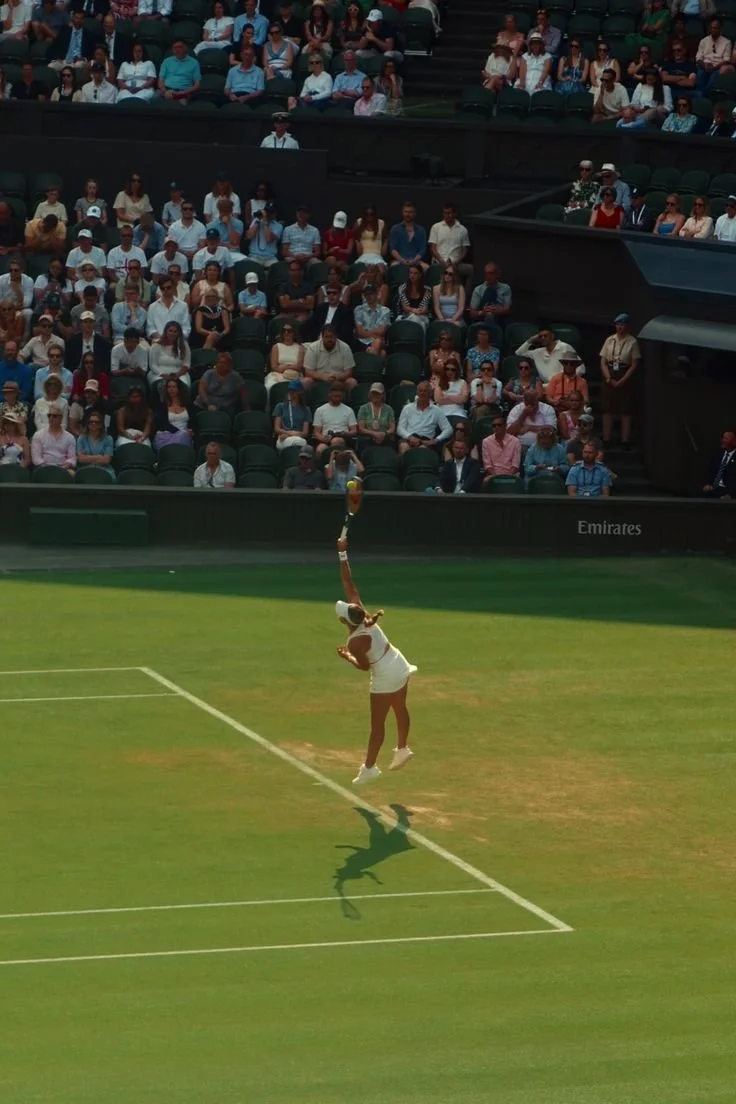
The white crisp tennis dressing blending with the green grass of Wimbledon - London.
Sport and style go hand in hand. But Wimbledon and the Monaco Grand Prix stand alone. Each summer, London’s grass courts and Monte Carlo’s sunlit streets create a backdrop for a unique experience. Dressing here means impressing not just blogs, but all who watch the races or matches. Here, elegance and status are tradition. The result is a display of luxury blending with the sport’s real-time aesthetic.
Over the years, influence has seeped into every aspect. Tenniscore now fills wardrobes and personalities. Riviera gloss, thanks to Formula 1, signals modern luxury. Designers, bloggers, and photographers study every look from Center Court and the Monaco paddock each year. Celebrities use these events to experiment with style. Brands build campaigns and momentum around courtside and trackside sightings. Sometimes, one stand photo is enough to launch a TikTok trend.
What makes these two stand out is their mix of heritage and ambition. Wimbledon is about crisp whites, both on and off the court. Players blend chic elegance with a personal street style. Monaco is about speed, shine, and new thrills. It radiates Riviera glamour. Not only drivers but also celebrities and F1 wags adopt this aesthetic. They define loud luxury.
From its Iconic all-white Dress Code to the rise of Tenniscore and Celebrity Spectator Style, Wimbledon has evolved into one of Fashion’s most Influential Summer Stages
Wimbledon is synonymous with understated sophistication. Originating in 1877, it has become the visual emblem of tennis, with the all-white dress code defining every tournament. Few things are as striking as crisp whites on emerald grass. Wimbledon’s influence goes beyond the court and is a masterclass in tailoring: linen suits, pleated skirts, crisp shirts, loafers, and pearls. Here, luxury whispers. Unsurprisingly, tenniscore has proliferated as brands like Ralph Lauren, Gucci, and Miu Miu reinterpret pleated minis, varsity knits, and tennis sportswear. The look is everywhere—on summer streets, runways, Pinterest, and TikTok. Wimbledon’s aesthetic has become a commercial goldmine, driving capsule collections and athlete partnerships, making the movement’s growth in tennis courses inevitable.
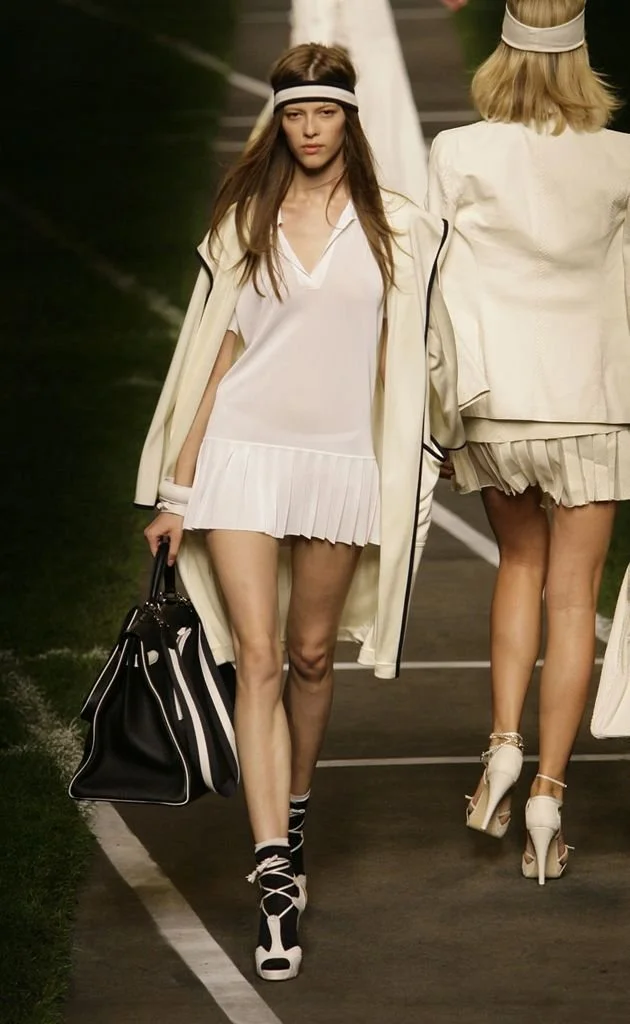
Hermès Spring RTW 2010 by Jean Paul Gaultier - inspiration drawn from tennis
We now give more attention to athletes and brands, but Wimbledon’s spectators also play a major role. There are no official dress codes for the public, but they still adopt tennis modesty. During British summertime, fashion moments support the tournament. Gemma Chan’s 2022 checked Louis Vuitton mini dress and Princess Diana's pastel-yellow suit from ‘95 are examples. Celebrity Wimbledon appearances go viral. Outfits are dissected almost as much as the matches. Zendaya’s Ralph Lauren look at the finals set the internet buzzing. Now, fashion forums and Reddit threads track Wimbledon style in real time.
Wimbledon’s reputation as a key summer social event underscores its link with Ralph Lauren, official outfitter since '06, which designs uniforms for umpires, ball boys, and officials. Reaches beyond luxury houses: high-street brands, sportswear labels, and contemporary designers all draw from its visual codes.
Riviera Glamour and Paparazzi-Era Excess to today’s Motorcore Fashion and Luxury Paddock Culture
From England to Monaco, every May or June, Monte Carlo becomes a living runway. Fashion, celebrity culture, and horsepower all compete for the spotlight. The paddock buzzes with energy, matching the racetrack itself. Formula 1, old-money Riviera glamour, and the newest luxury codes converge here. Formula 1’s bond with fashion has changed a lot over the past decade. In the past, sponsor-heavy uniforms dominated fashion, but now team merchandise stands out. Fashion houses and designers move through the paddock as naturally as drivers and engineers. What makes the difference is their positioning. Wimbledon stays quiet, but in Monaco, they race. Their scenery matches the mood on and off the track. There is no such thing as overdressing. The focus looks refined and fits the Riviera setting, with yachts bobbing in the harbor. But Monaco’s fashion legend started long before social media.
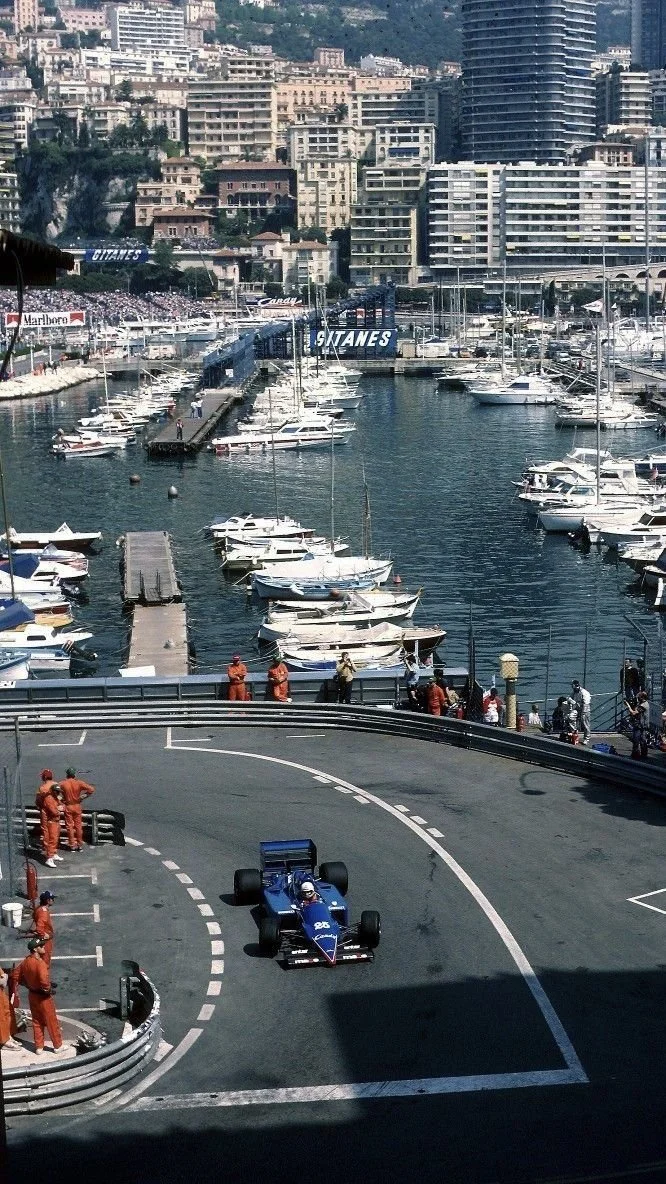
Formula 1 car matching the scenery of the French/Monaco Riviera
Monaco’s modern style was cemented in the 1990s and early 2000s, when Monte Carlo was a hub of paparazzi, supermodels, and lavish excess. In the 1990s, Monaco set the blueprint for glamour that fashion now references. Supermodels stepped off speedboats in slip dresses and micro sunglasses. Formula 1 drivers arrived on yachts in breezy tailoring. The era’s visual language—relaxed tailoring, nautical whites, silk scarves, vintage racing jackets, monochrome looks—now inspires today’s nostalgia. In the early 2000s, the balance of understatement and visibility peaked. Monaco became the place where fashion, nightlife, celebrity media, and luxury branding collided. The paddock offered backstage access for actors, models, musicians, designers, and executives, each adding their style to the spectacle.
Drivers stepped out in tailored polos, aviators, and luxury watches. Motorsport and luxury intertwined performance and status, side by side. Celebrity culture boosted Monaco’s status. The Grand Prix became a magnet for A-list actors, musicians, supermodels, and influencers. They used the weekend as a fashion showcase. Monaco’s ties to celebrity style go back decades. In the late 1990s and 2000s, supermodels and Hollywood stars helped establish Monte Carlo’s glamorous image. Fashion and motorsport became inseparable. Formula 1 drivers also became style figures. Lewis Hamilton modernized motorsport fashion. He brought Formula 1 into circles usually reserved for luxury designers. Through designer collaborations, fashion week appearances, and bold style, Hamilton turned the Formula 1 driver into a global fashion personality.
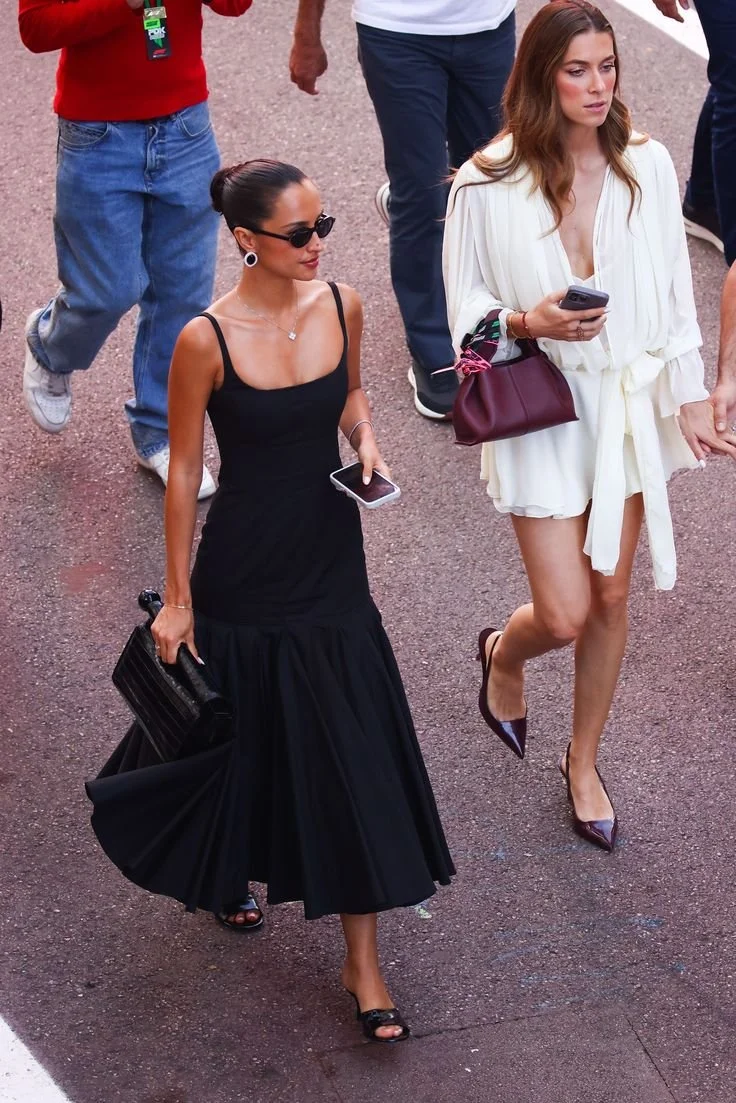
Alexandra Saint Mleux - now Alexandra Leclerc - in a drop-waist dress by Jacquemus designer Simon Porte Jacquemus
Monaco, unlike Wimbledon’s reserved elegance, is all about being seen. Outfits stand out from terraces, yachts, balconies, and Instagram. Here, it’s about embracing the fantasy, not restraint. That is Monaco’s magic. It sells the fantasy of speed, wealth, exclusivity, and Mediterranean glamour. Fashion can’t stop romanticizing it. White yachts, champagne receptions, silk shirts, vintage Ferraris, and sunset-lit harbors feel cinematic; almost unreal.
The Polished Traditions of Wimbledon & the Sun-Soaked Spectacle of Monaco, today’s most Influential Fashion Moments are no longer happening on the Runway
Wimbledon and Monaco: two destinations, two daydreams. One offers strawberries and cream on emerald lawns, starched whites, and whispered tradition; the other is a sun-drenched blur of champagne flutes and superyachts, with the Mediterranean sparkling below like a diamond bracelet at your feet. Wimbledon is the blueprint for classicism: heritage, discipline, and sophisticated style. Monaco is pure spectacle, fast cars, camera flashes, and the craft of being seen. Together, they set the dress code for modern status and style.
Forget the fashion show’s front row. The season’s most compelling looks now debut on Center Court at Wimbledon, in the Monaco Formula 1 paddocks, and across VIP suites and Instagram feeds. Not the traditional catwalk—it has become fashion’s stage: unfiltered, unscripted, unmissable. As luxury, celebrity, and sport collide, Wimbledon and the Monaco Grand Prix transcend mere events. Wimbledon stands as a stage for refined tradition, while the Monaco Grand Prix dazzles with daring spectacle; both write fashion’s next chapter, where elegance and extravagance evolve for a new generation.