
How the Past Became Fashion’s Biggest Inspiration
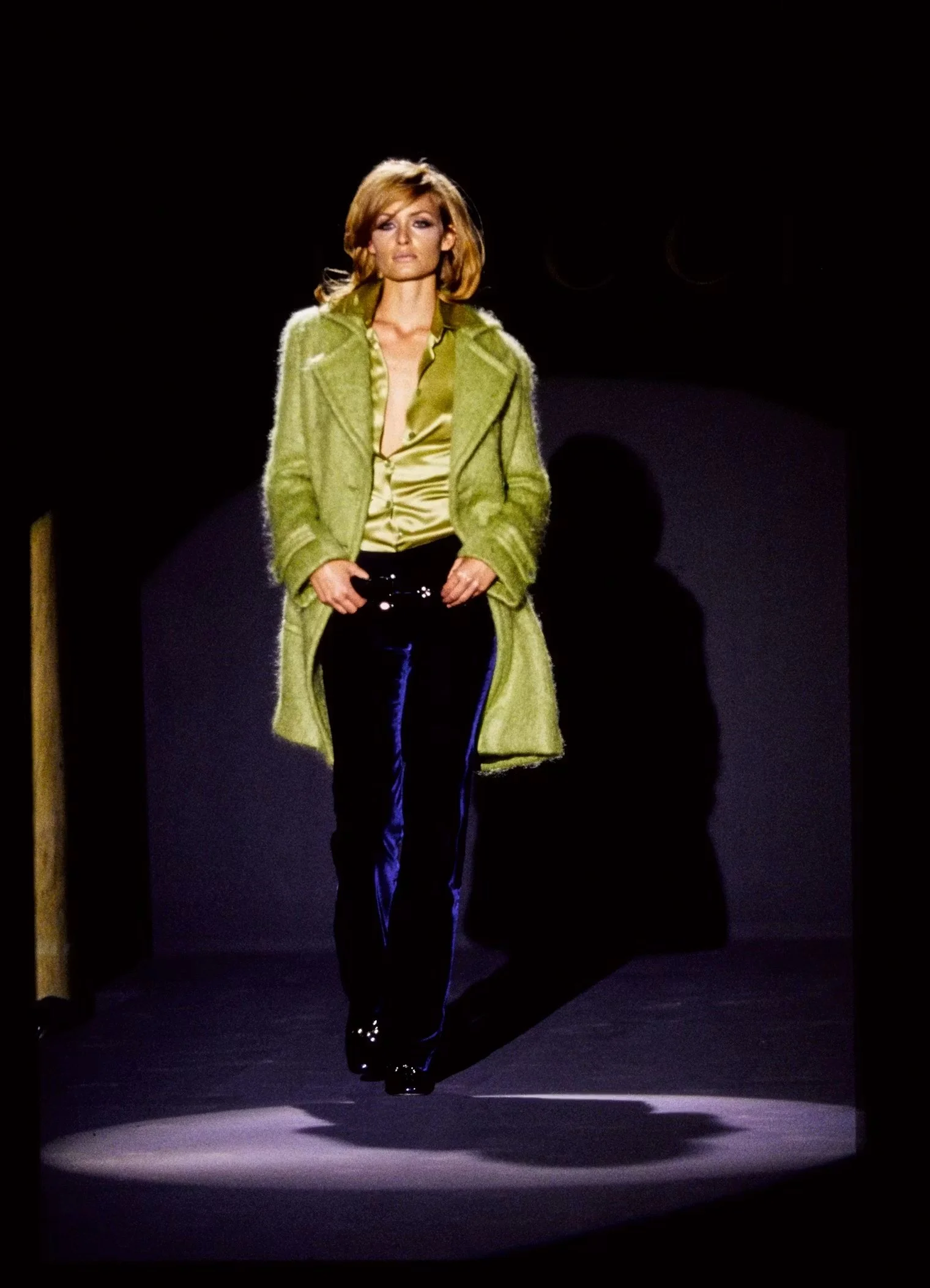
Opening look of Ford’s Fall ’95 show. Photo by Getty Images and W Magazine
Fashion is supposed to be about what’s next, but lately, it feels just as fixated on what came before. Y2K denim is everywhere again, vintage handbags are back on every It girl’s arm, and even Victorian ruffles are making a comeback. Nostalgia becomes the moodboard for how we dress, a way of working through what we miss, what we want, and who we think we are.
Every generation has its moment of raiding the past, but this current nostalgia feels more intense, almost personal. Instagram and TikTok are flooded with old campaign shots and runway clips, while Depop and The RealReal have turned vintage shopping into a global sport. Gen Z, in particular, is dressing for decades they never lived through, using fashion as a portal to someone else’s memories. What we choose to bring back says just as much about where we are now as it does about where we’ve been.
Why Certain Pieces Stay With Us Forever
Clothes are emotional souvenirs. A leather jacket might conjure up the wild energy of ‘80s nightlife. Slip into a Juicy Couture tracksuit, and you’re suddenly channeling early-2000s tabloid royalty. A vintage Chanel tweed jacket? That’s pure old-school glamour, the kind you see in black-and-white photos. Fashion is memory you can wear, and it’s always being captured, shared, and reimagined.
When the world feels shaky—economy, politics, tech moving at warp speed—nostalgia hits harder. It’s no wonder so many people are reaching for styles that remind them of easier days, even if those days are more fantasy than fact.
The return of Y2K fashion is one of the clearest examples. Metallic fabrics, baby tees, low-rise jeans, and rhinestone accessories are not merely random trend revivals. They represent a longing for the optimism and playful excess associated with the early internet age. Publications including Vogue and L’Officiel note that Gen Z sees Y2K fashion as both nostalgic and aspirational, even if many consumers were too young to fully experience the era themselves.
There’s even a word for it: anemoia, that bittersweet longing for a time you never actually lived.
The Internet’s New Obsession With Retro Identity
Maybe the wildest part of all this is how Gen Z became deeply obsessed with eras they only partially experienced or mostly discovered through reruns, Tumblr archives, paparazzi photos, YouTube clips, and TikTok edits. Flip phones, chunky digital cameras, chaotic celebrity street style, mall culture, and Paris Hilton-era fashion are not just aesthetic references anymore. They represent a longing for a version of culture that feels less curated and less controlled than today’s hyper-digital reality.
Nostalgia has a way of glossing over the messy parts. It skips the awkward moments, ignores the cultural cringe, and keeps only what feels good. What sticks are the visuals: the mood lighting, the soundtrack, the paparazzi flashes, the faces on magazine covers, and the feeling you get when you think about a certain era.
That’s why the Y2K comeback feels so curated. The early 2000s you see on runways and Instagram aren’t a carbon copy of the real thing. It’s a remix built from teen movie wardrobes, MTV after school, paparazzi shots outside LA clubs, tabloid covers at the grocery store, and the internet’s collective memory. No one is actually dressing like a suburban mall kid in 2003. They’re channeling the dream version of 2003 that lives in moodboards and TikTok edits.
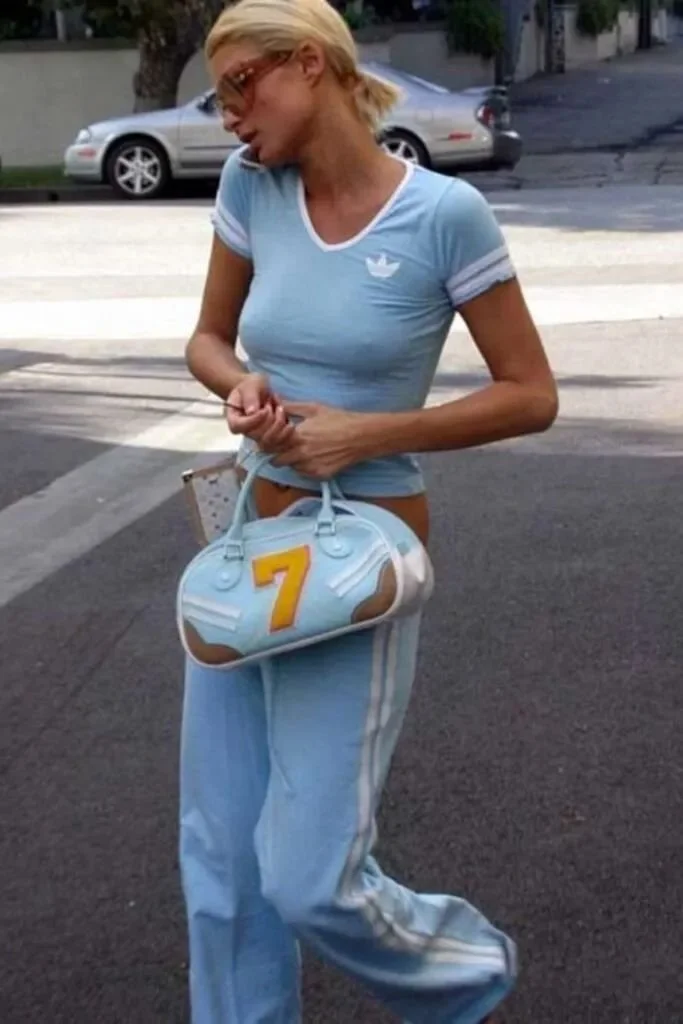
Paris Hilton in a monochrome blue outfit, expressing the true Y2K aura
The internet is the real engine behind this nostalgia trip. TikTok and Instagram archive accounts are always resurfacing shots of Paris Hilton ducking into a limo, Lindsay Lohan on a red carpet, or grainy clips from The Simple Life. These images lose their original context and turn into pure inspiration. The wild, messy celebrity scene of the 2000s—once trashed by the press—now looks glossy, fun, and a little bit untouchable.
That kind of selective memory is what makes nostalgia feel so safe. People remember the emotional simplicity, even if the reality was anything but. Fashion nostalgia works because it’s about the vibe, not the facts. It lets you slip into a version of the past that feels bold, expressive, and somehow familiar, even if you never lived it the first time around.
Y2K style today is proof. The comeback is all about rhinestone butterfly clips, low-rise denim, micro bags, Juicy tracksuits, and that flashbulb energy. What’s missing are the rougher edges, the mean headlines, the impossible beauty rules, the nonstop tabloid circus. The past gets edited for the now. That’s why fashion nostalgia isn’t about copying history but more about telling a story. Designers, brands, influencers, and everyone scrolling their feeds are remixing the past, pulling out the best bits, updating them, and piecing them together to fit what people want right now.
The Emotional Value of Secondhand Clothing
Nostalgia has changed the way we shop, too. Vintage and archive pieces are prized for their one-of-a-kind energy in a world of copy-paste trends. Throw on vintage Prada or a faded band tee, and you’re telling the world you know your stuff, and you’re not just following the crowd. Resale platforms such as Depop, Vestiaire Collective, and The RealReal have turned archival fashion into a booming economy. According to multiple reports, younger shoppers are driving significant growth in secondhand fashion because they want both sustainability and authenticity.
It’s not just about buying something new anymore. People want a story. A vintage jacket feels like it’s lived a life. An archival runway piece is more than just a look. It’s a piece of fashion folklore, the kind of thing that lingers in the collective memory long after the season’s last model has left the catwalk. Certain collections, silhouettes, and accessories become shorthand for a mood, a celebrity moment, or a shift in the way we dress. To wear or even nod to an archival piece now is to signal that you’re fluent in fashion’s language and that you’re tuned in to the stories that keep style alive. Luxury brands are in on the secret. That’s why so many houses are rifling through their own archives for inspiration right now. In a moment when microtrends flicker and fade before you’ve even scrolled to the next post, heritage has become fashion’s ultimate flex. By reviving iconic collections, brands tap into that sense of emotional recognition, while still making it feel fresh for a new generation.
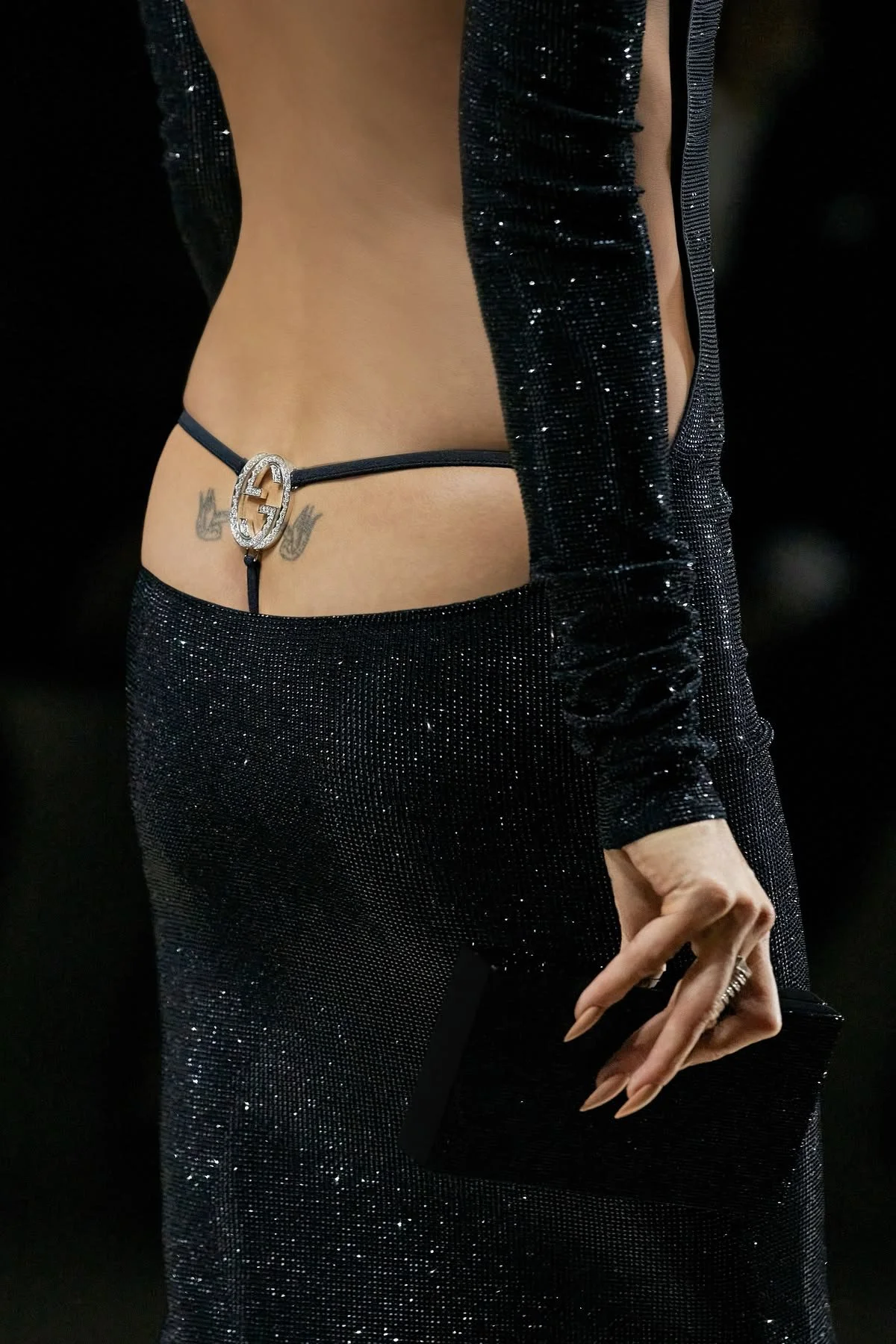
Kate Moss Gucci G-string revived in Demna's first collection for Gucci. Courtesy of of Gucci
Look at Gucci. Recent collections have leaned hard into the disco glamour of the 1970s and the razor-sharp minimalism of the Tom Ford era. Picture vintage logos, sunglasses that swallow half your face, faux fur coats, and tailoring that feels lifted straight from a backstage Polaroid. It’s a move that lets longtime fans revisit the Gucci they fell for or the one they wish they’d experienced firsthand. The nostalgia is intentional; designers know that right now, everyone wants pieces with a story built in. Dior has also embraced archive nostalgia by reviving symbols from the John Galliano years. The return of the famous “J’Adore Dior” T-shirts, originally iconic in the early 2000s, reflects the industry’s renewed obsession with Y2K fashion and celebrity-era glamour. Modern collections reinterpret Galliano’s theatrical silhouettes and corsetry through a contemporary lens, blending nostalgia with present-day styling.
Fendi’s Baguette bag is the ultimate case study in the power of nostalgia. The bag first became a phenomenon in the late 1990s and early 2000s, with a little help from Sex and the City. It was one of the original It bags, the kind you’d spot on Carrie Bradshaw’s arm or in paparazzi shots from the era. Now, its return is pure pop-culture déjà vu for longtime fans, while a new generation is falling for the silhouette after seeing it go viral on their feeds. Prada and Miu Miu are playing the nostalgia game, too. Miu Miu’s latest collections revived ultra-mini skirts, varsity sweaters, and silhouettes straight out of the early 2000s, pieces that have basically taken over TikTok. Prada, on the other hand, keeps doubling down on its minimalist 1990s DNA, a look that Gen Z now considers both timeless and quietly subversive.
Nostalgia is having a moment, partly because archival fashion feels more authentic than anything churned out by fast fashion. Vintage runway pieces and reissued designs come with a sense of permanence and a backstory. Wearing an archival-inspired Gucci jacket or a reissued Dior saddle bag just feels deeper, layered with meaning in a way that something brand-new rarely can.
Social media has only intensified this obsession. Archive fashion accounts, runway history pages, and celebrity throwback clips constantly circulate online, turning old collections into viral references for new audiences. Bella Hadid’s love of vintage Prada, Rihanna wearing archival Galliano, and Zendaya referencing old Mugler collections have all contributed to the growing prestige surrounding fashion archives. The archive has become fashion’s secret weapon. It’s where brands find not just inspiration, but credibility, emotion, and cultural relevance. In many ways, the future of fashion will depend on how well brands can remix their own history.
The Cultural Patterns Behind Trend Revivals
Fashion historians have long argued that trends operate in cycles, often returning every 20 to 30 years. Researchers studying fashion patterns and digital archives have found that clothing trends consistently move through phases of emergence, popularity, decline, and revival. But nothing ever comes back exactly the samely the same.
Today’s revivals are filtered through contemporary values. For example, the return of corsets differs dramatically from historical corsetry. Modern wearers often style corsets as symbols of empowerment rather than restriction. Similarly, oversized tailoring inspired by the 1980s now reflects gender fluidity and relaxed luxury rather than corporate power dressing. Nostalgia is about remixing. The past is just raw material for who we want to be now.
This explains why nostalgia constantly evolves. While Y2K aesthetics dominate today, fashion is already reaching further back into history. Recent runway collections have referenced Rococo glamour, Victorian gothic influences, Renaissance silhouettes, and 1920s embellishment. The past never runs out of uses. Every generation puts its own spin on it, shaped by whatever we’re worried about—or dreaming of—right now.
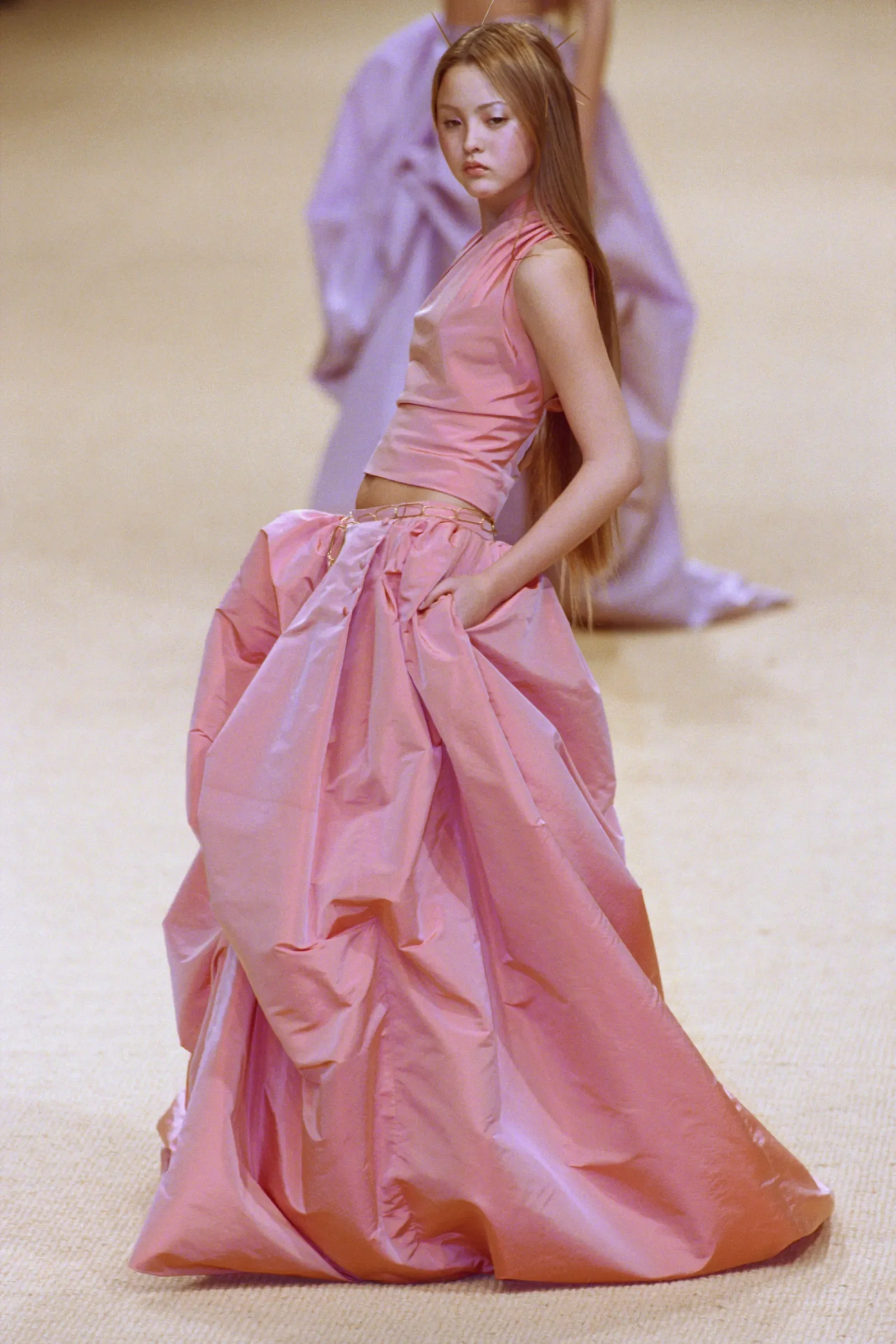
Cult model Devon Aoki in Chanel’s take on a low-rise ballgown skirt in 1999
The Social Meaning Behind Nostalgic Style
In the end, what we’re nostalgic for says a lot about what we’re missing. When everything’s minimal, we want more. When screens take over, we crave something analog. When the future feels shaky, the past feels safe.
Fashion is a mirror, always. The comeback of vintage shapes, old-school luxury, and retro looks is proof that we’re all searching for comfort, individuality, and a little bit of connection in a world that won’t slow down. The twist? Nostalgia always becomes tomorrow’s memory. Every revival plants the seeds for the next wave of rediscovery.
Fashion never truly repeats itself. It remembers, it reinvents, and it keeps moving forward.