
Marni in a New Frequency: Fall 2026 and the Art of Intelligent Eccentricity
Courtesy of Vogue Runway
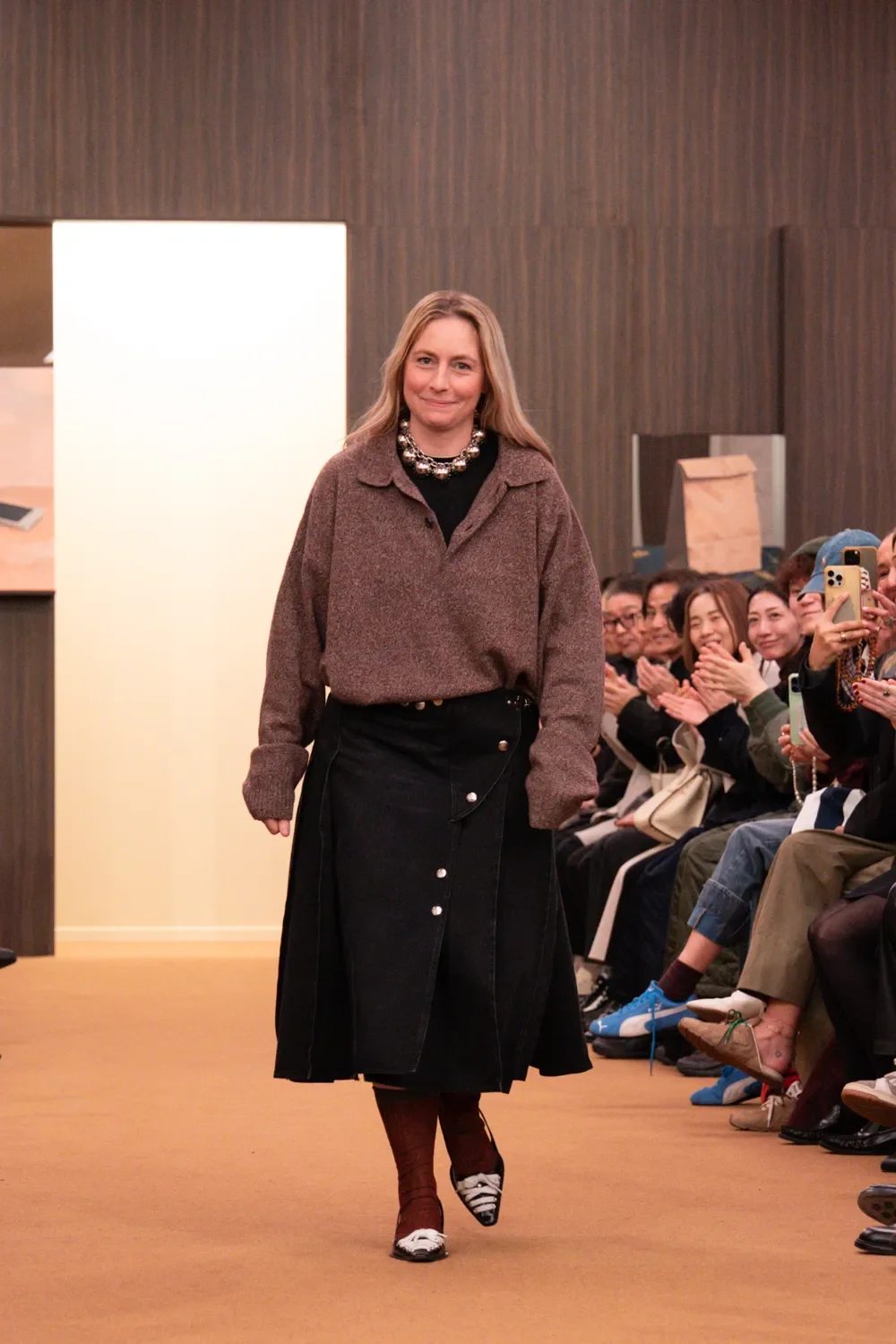
At this season’s Milan Fashion Week, the mood felt different the moment Marni appeared on the schedule. Anticipation hung in the air not because of spectacle, but because of transition. For Fall 2026 Ready-to-Wear, the house unveiled its first collection under the creative direction of Meryll Rogge, and with it, a recalibration of one of fashion’s most beloved vocabularies.
Before joining Marni, Rogge built her reputation at Dries Van Noten and Marc Jacobs, where she became known for her fusion of artful tailoring and sly, offbeat details. Her inspirations for this debut include mid-century European art, vintage Italian upholstery fabrics, and the notion of clothing as both armor and invitation, ideas that subtly infuse the collection and ground its intelligent eccentricity.
At fmmé magazine, we often speak about houses as living organisms. They evolve. They shed skin. They remember. Rogge’s debut felt precisely like that: a memory reinterpreted rather than erased.
The Return of Emotional Intelligence
To understand the weight of this moment, one must remember that Marni was founded on quiet eccentricity by Consuelo Castiglioni, a woman who made intellectual dressing feel instinctive. Later, under Francesco Risso, the house leaned into expressive theatricality, amplifying color and emotion into almost operatic proportions.
Rogge does something subtler. She does not reject either era. Instead, she extracts their essence and distills it. Her Marni is thoughtful. Slightly offbeat. Controlled, yet warm. It is eccentricity whispered rather than shouted.
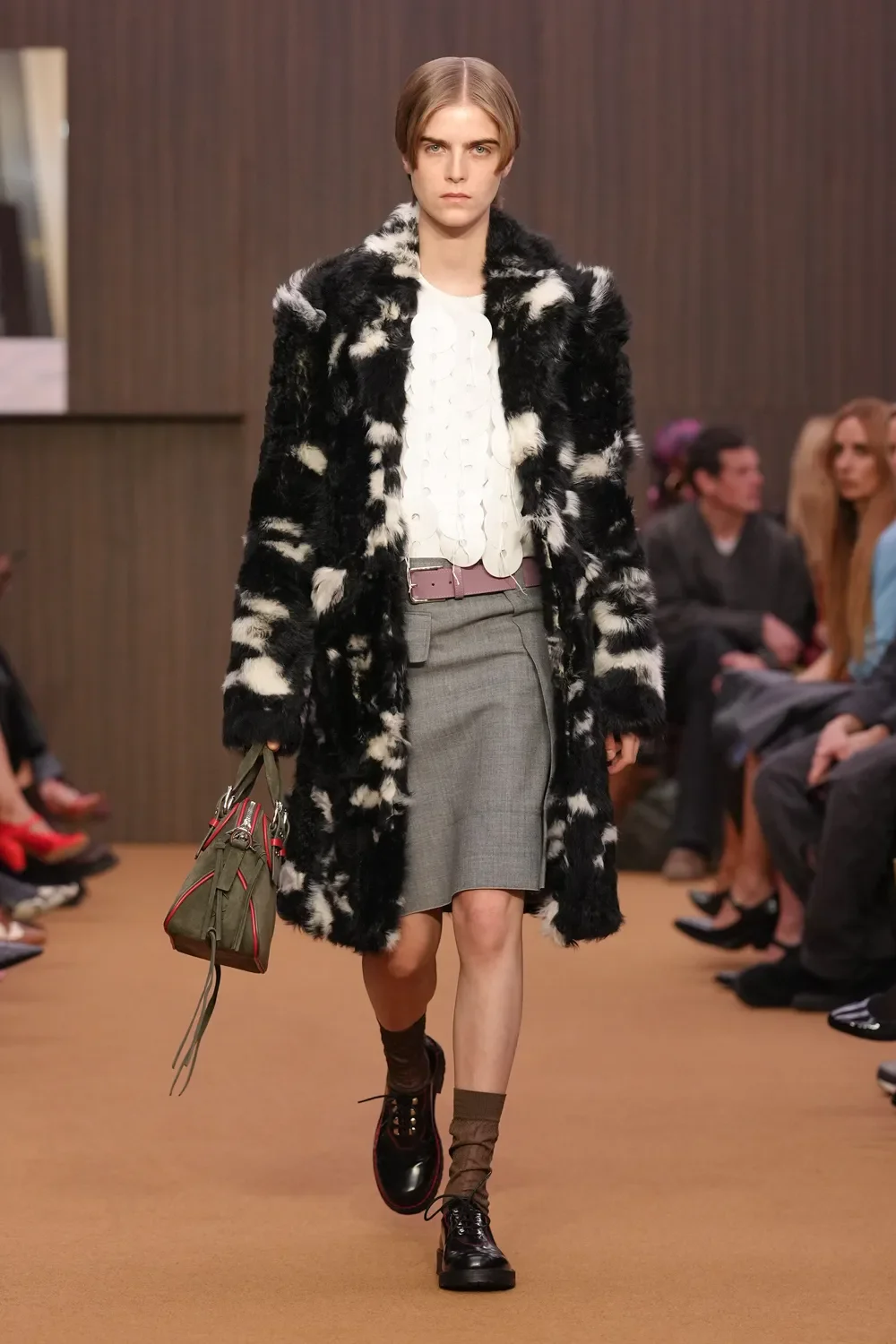
The opening looks set to immediately set the tone: elongated pencil skirts shimmering with oversized sequins, paired with structured, almost austere coats. One unforgettable look featured a rainy grey skirt, anchored by a sheep black-and-white wool coat with soft cut shoulders and hidden snap closures.
Underneath, a white shirt with every sequin glinting under the lights, a pair of mahogany leather loafers, and a sculptural, oversized statement bag tipping into costume. There was no forced drama. Just tension, the good kind. The kind that makes you lean forward.
Silhouettes That Breathe
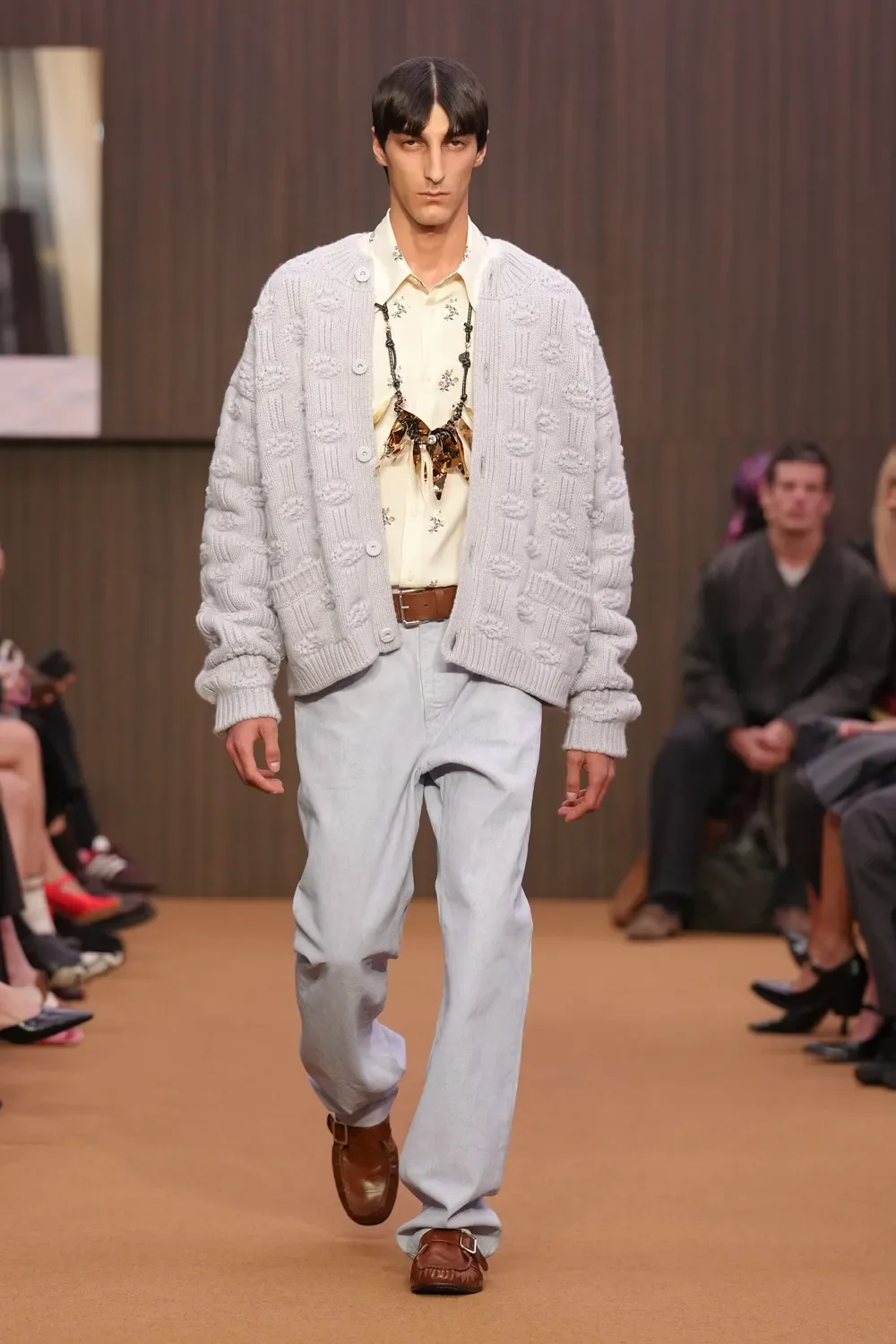
Fall 2026 is not about reinvention through exaggeration. It is about refinement. Tailoring felt grounded but not rigid. Coats skimmed the body rather than armored it. Knitwear thick, tactile, beautifully irregular, added a human softness to sharper shapes. Some plaids nodded to tradition but felt playfully skewed, and buttons were large enough to be noticed but not so large as to become ironic.
What stood out most was proportion. Rogge understands restraint. A pencil skirt sparkles, but the top remains quiet. A clean, linear hem balances a dramatic knit. Volume is considered, never indulgent. In a market saturated with extremes, micro versus oversized, minimalism versus maximalism, Marni Fall 2026 sits in the intelligent middle. It feels lived-in already. Like pieces you would reach for without overthinking, yet never grow bored of.
Texture as Narrative
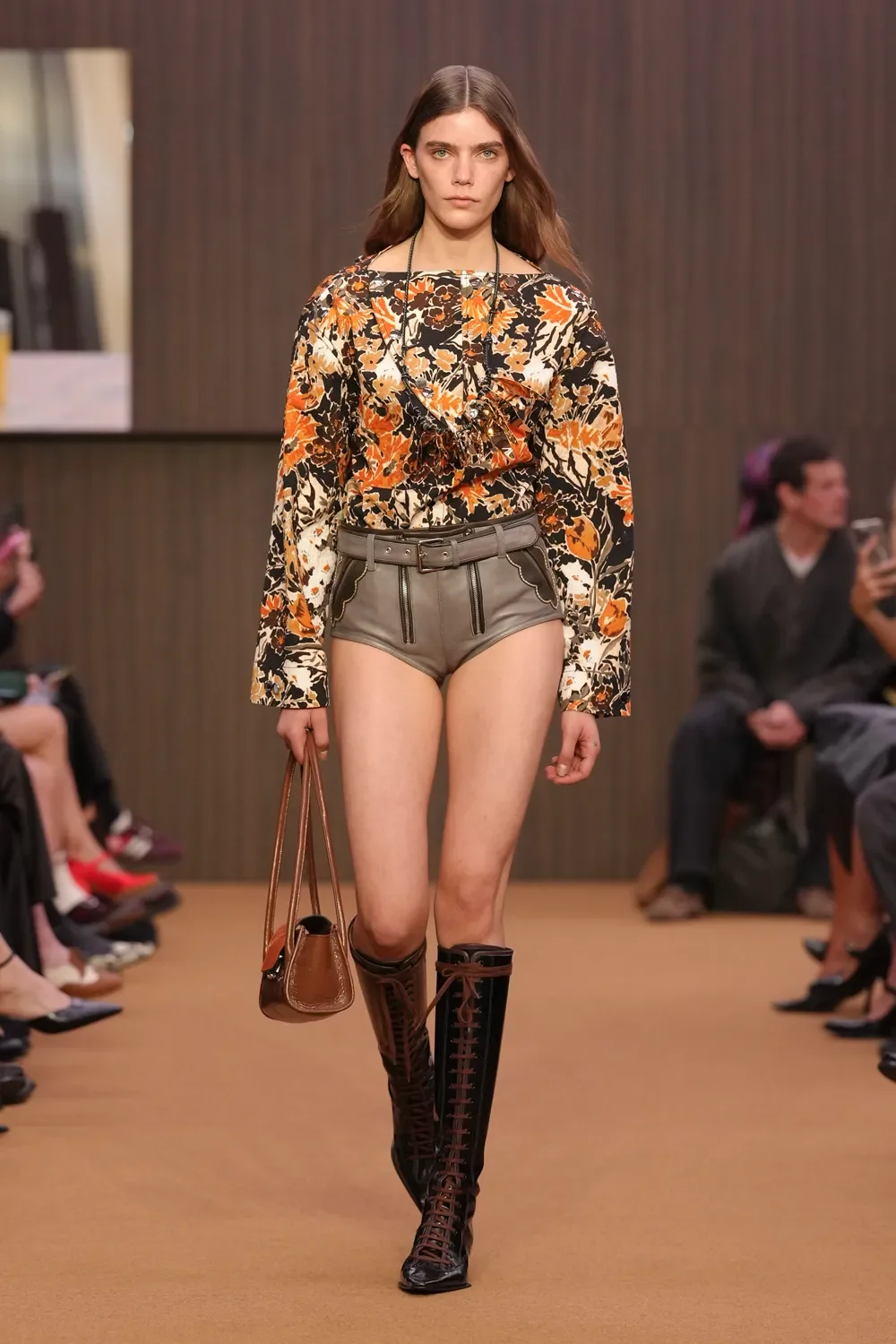
If there was one leitmotif, it was tactility. Sequins were not decorative afterthoughts but structural elements. Wool felt substantial. Knits looked hand-worked, almost imperfect by intention.
This is where Rogge’s confidence reveals itself. She does not rely on gimmicks. She builds atmosphere through fabrication. The collection reads as deeply material. It invites touch. It rewards proximity.
And perhaps that is the most Vogue thing about it, this understanding that fashion is not only visual. It is sensory. Emotional. Personal.
A Woman Who Knows Herself
This season, the Marni woman feels self-aware. She is not performing for the algorithm. She is dressing for her own rhythm. She might pair the glittered skirt with flat boots instead of heels. She might wear the bold knit layered under a strict coat for contrast. She understands nuance.
At fmmé, we often ask: Does a collection expand the wardrobe or merely decorate it? Fall 2026 expands it. These are clothes that will move from runway to real life without losing their soul.
The Quiet Power of Continuity
Creative transitions are often dramatic; headlines love rupture. But Rogge’s debut proves that evolution can be powerful without being loud. Where Consuelo Castiglioni founded Marni on quiet, intellectual eccentricity, making oddness feel effortless, and Francesco Risso embraced color and theatricality to amplify the house’s voice, Rogge charts a subtler, more introspective course. She preserves Marni’s core DNA intellect, curiosity, and subtle oddity, but adds clarity and restraint, channeling both predecessors without imitation. The result does not feel like a reboot, but a recalibration. The house’s spirit remains intact, yet a new steadiness and precision pulse through every look.
Fall 2026 signals a future where Marni returns to its emotional core while stepping forward with contemporary precision. It is less about spectacle and more about sincerity. Less about volume and more about vibration.
And in today’s fashion landscape, that feels radical.